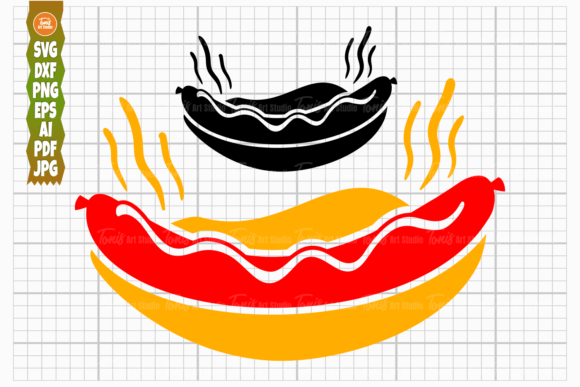
Hot Dog SVG PNG DXF, Hotdog Clipart
A Playful Design That Works—If You Use It Right
I pulled up Hot Dog SVG PNG DXF, Hotdog Clipart last week while prepping a batch of custom embroidered tote bags for a local food truck’s pop-up event. The brief was simple: fun, food-themed, family-friendly—but not childish. No cartoon vomit, no exaggerated winks, no over-the-top ketchup splatter. Just something warm, recognizable, and stitchable. This design landed right in that sweet spot—not too busy, not too sparse, with just enough personality to feel handmade without demanding perfection.
First Impression: Friendly, Not Fussy
The moment it opened in my embroidery software, I noticed how cleanly the outlines resolved—even at small sizes. It’s a single-layer hot dog illustration: bun, frank, mustard swirl, maybe a subtle grill mark or two. No tiny sesame seeds, no layered shadows, no overlapping vector paths that fight during digitizing. That’s huge. As a designer who’s wrestled with “cute but un-stitchable” clipart before, I appreciated the restraint. It reads instantly as *hot dog*, not “abstract food shape.” That clarity matters when you’re stitching on a curved surface like a cap or scaling down for a baby onesie.
This isn’t fine-dining elegance—it’s backyard barbecue energy. So it belongs on sweatshirts for summer markets, tea towels for café gift shops, embroidered patches for foodie festivals, and personalized lunchbox liners for school-aged kids. It’s also quietly versatile: flip the mustard yellow to red thread, and it becomes a chili dog; swap to charcoal gray thread on a navy tote, and it gains a little retro diner cool.
Where It Shines (and Where It Needs Guardrails)
Shines:
- Custom apparel: Works beautifully on mid-weight cotton blends—think crewneck sweatshirts, canvas totes, and denim jackets. The clean lines hold up under medium-density fill stitch without bleeding or distortion.
- Baby embroidery: Scaled to 2.5–3 inches wide, it reads clearly on onesies and burp cloths—especially with soft pastel thread on light fabric. No tiny details to snag or unravel.
- Embroidered patch: Clean outer edge = easy cut-and-sew or iron-on backing. No jagged vectors to fray at the perimeter.
- Holiday or boutique branding: Paired with a simple “Grill & Chill” or “Dog Days” text block, it elevates seasonal kitchen towels or aprons without overwhelming them.
Use carefully:
- Stretchy fabric: Avoid tight knits like jersey tees unless you’re using cutaway stabilizer and reducing stitch density—those smooth curves can pucker if tension isn’t dialed in.
- Dark or textured fabric: On black terry cloth or heavy linen, test contrast first. A light mustard thread may disappear; go bolder—cream, gold, or even white—with a tear-away to lift definition.
- Small hoop sizes (under 4"): It scales well, but avoid cramming it into a 3" hoop with dense satin stitch around the bun ends—stitch crowding causes thread breaks and uneven coverage.
- Curved surfaces (caps, beanies): The shape is forgiving, but center it carefully. The bun’s slight asymmetry means off-center placement looks unintentionally lopsided—not charming.
What It Adds to Your Finished Product
Let’s be real: a hot dog isn’t high art—but Hot Dog SVG PNG DXF, Hotdog Clipart delivers reliable charm. When stitched cleanly, it signals approachability and craft care—not mass production. Customers notice that. I’ve seen Etsy buyers leave notes like “The embroidery looked even better than the photo!” when designs have this kind of intentional simplicity.
It supports brand consistency for small shops: imagine it repeated along the hem of a chef’s apron line, or as a subtle corner motif on nursery pillow covers (“Dog Days of Summer” theme). It also holds up in printable mockups—clean vectors mean crisp PNG previews for your Etsy listings or Instagram posts. And because it’s offered as SVG, PNG, and DXF, it bridges embroidery and paper-craft workflows—handy if you’re bundling digital embroidery files with printable party kits or craft kits for makers.
Practical Designer Notes Before You Stitch
Before committing thread and time:
- Test on scrap fabric first—same weight and weave as your final project. Watch how the mustard swirl behaves: does it stitch smoothly, or does it stutter in tight turns?
- Check thread color contrast against both light and dark backgrounds. What reads bold on white may vanish on charcoal.
- Review stitch density. If your version came pre-digitized, open the .pes or .dst file and look for overly dense fill areas—especially near the frank tip. Trim where needed.
- Confirm hoop size. Even if the design fits in a 5x7, ask: does it leave room for hooping without shifting? Better to use a 6x10 if your machine allows.
- Inspect small details in your software zoom—no stray nodes, no overlapping paths. Clean vectors = smoother auto-digitizing if you’re converting it yourself.
- Try black-and-white mockups. Sometimes color distracts from structural balance—grayscale reveals if one side feels heavier.
- Use proper stabilizer. Medium-weight cutaway for knits, tear-away for stable wovens. Skip the lightweight mesh here—the bun’s smooth arc needs support.
- Verify licensing. Since this is labeled as a digital download for Crafts and Graphics, confirm whether commercial use (e.g., selling embroidered totes on Etsy) is permitted—don’t assume.
Final Thought: A Solid Staple, Not a Showstopper
Hot Dog SVG PNG DXF, Hotdog Clipart won’t win design awards—but it will sell. It’s the kind of embroidery file that disappears into your product just enough to feel intentional, not intrusive. It’s dependable for craft business owners juggling 12 SKUs, Etsy sellers refreshing seasonal listings, or hobbyists stitching personalized gifts that land with warmth and wit. Used thoughtfully—with attention to fabric, thread, and context—it earns its place in your design assets library. Not as a hero, but as a trusted supporting player. And in the world of handmade products, that’s often exactly what you need.