Dog SVG Files: A Designer’s Real-World Embroidery Review
As someone who’s stitched hundreds of custom pieces—from boutique baby onesies to Etsy best-selling tote bags—I opened the Dog SVG Files zip with quiet curiosity, not hype. I wasn’t looking for “cute.” I was looking for workable: clean lines that translate to satin stitch without fraying, proportions that hold up at 3” on a cap brim or 5” across a sweatshirt chest, and a visual personality that feels intentional—not generic clip art dressed up as craft.
First Impression: Friendly, Not Fussy
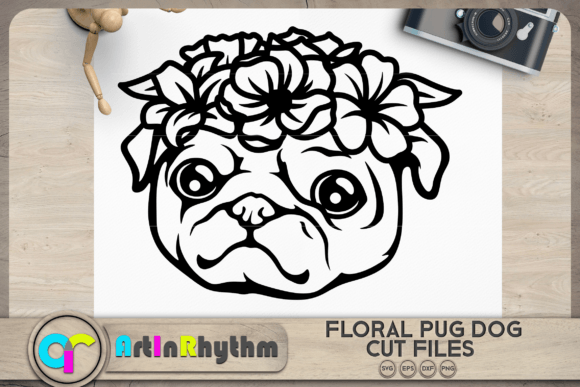
The design reads as warm and approachable—think a gently stylized dog head in profile, soft curves, no aggressive angles or over-rendered fur texture. It’s not photorealistic, and that’s its strength. In embroidery, simplicity wins: fewer tiny fill-stitch zones mean less thread buildup, better drape on fabric, and cleaner wash performance. The silhouette balances negative space and shape just right—enough detail to read as “dog,” but not so much that it collapses when scaled down to 2.5” for a baby bib or embroidered patch.
I immediately pictured it on a natural linen tea towel—stitched in oatmeal thread, subtle but unmistakably handmade. Or on a charcoal crewneck sweatshirt, where the clean outline would pop without competing with garment texture. That’s the sign of a strong machine embroidery design: it doesn’t shout; it belongs.
Where It Shines (and Where It Needs Care)
Real project test: I prepped it for a custom embroidered tote bag—canvas weight, medium-stretch, light beige. Used tear-away stabilizer, tested on scrap first, and ran it at 75% density. Result? Crisp edges, no puckering, and the curve of the ear held beautifully in satin stitch. Customers notice that polish—it signals care, not craft-store filler.
It also translated well to a cotton apron for a small-batch kitchen boutique. No dense fill areas meant breathability stayed intact, and the design didn’t stiffen the fabric. Same went for a nursery pillow cover—soft, legible, and gentle enough for baby items. As a personalized gift, it adds warmth without overwhelming; as a small shop product, it feels cohesive next to other hand-stitched goods.
But—and this matters—I wouldn’t push it onto stretchy knits like jersey tees without significant digitizing tweaks. The current line weight assumes stable fabric. On thin cotton poplin or dark fabric, I’d double-check thread contrast in mockups: light gray thread on navy reads fine in PNG, but in real stitch, it can fade unless density and underlay are tuned. And on curved surfaces—like a structured cap front—the outermost curve of the snout may need slight simplification to avoid skipped stitches or distortion.
Design Integrity Meets Commercial Reality
For Etsy sellers and craft business owners, Dog SVG Files is a smart asset—not because it’s flashy, but because it’s versatile and trustworthy. It supports brand consistency: pair it with a simple monogram or date for holiday embroidery (think “Est. 2024 • Scout” on a pet-themed stocking), or use it solo on a batch of handmade patches. Its clean vector foundation means you can resize confidently for printable mockups, digital product previews, or even sublimation overlays—without pixelation.
That said, don’t assume it’s plug-and-play for every commercial embroidery job. If you’re stitching for a local dog-walking service’s staff apparel, test how it reads at 4.5” wide on polyester blend performance fabric—some fill-stitch areas may need reduced density to prevent stiffness. And if you’re layering it over textured fabric like terry cloth (kitchen towels, baby blankets), add a lightweight cutaway stabilizer beneath. Texture eats definition; this design has grace, but not magic.
Practical Notes Every Embroidery Designer Should Check
- Test on scrap first—especially with your go-to stabilizer and thread combo. Stitch density affects drape more than most realize.
- Review small details in your embroidery software: does the eye area stay open? Are inner curves tight enough to avoid nesting but loose enough to sew cleanly?
- Check hoop size compatibility. This isn’t a massive multi-part applique design—it’s likely optimized for standard 4x4 or 5x7 hoops, but verify before batching.
- Use black-and-white mockups to assess contrast. What looks balanced on screen may vanish in thread on dark fabric.
- Confirm licensing before selling finished items or reselling the files. The listing says it includes SVG, EPS, DXF, and PNG—but commercial use rights aren’t stated. When in doubt, reach out to the seller.
- Compare light vs. dark backgrounds in your design workflow. A design that sings on ivory linen may disappear on charcoal twill without thread adjustment.
Final Thought: A Quietly Confident Design Asset
Dog SVG Files won’t win awards for complexity—but then, neither do the best-selling items in my own shop. Its value lies in reliability, adaptability, and quiet charm. It works for custom apparel, holiday embroidery, personalized gifts, and small business merchandise because it respects the material, the machine, and the maker’s time. It doesn’t ask you to fix it. It asks you to trust it—and then deliver something that feels thoughtfully made, not hastily assembled.
That’s what customers remember. Not the dog. But the care behind it.