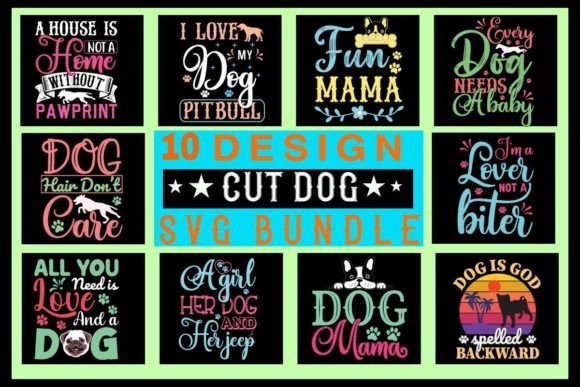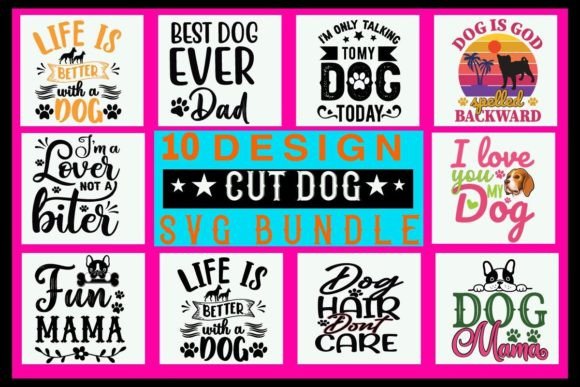
Dog-Bundle Dog SVG Bundle
A Designer’s First Look: Charm Without Clutter
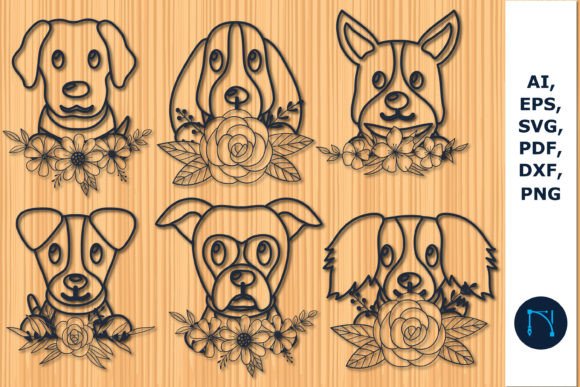
Opening the Dog-Bundle Dog SVG Bundle feels like flipping through a well-curated sketchbook—not overloaded, not overly polished, but full of warm, approachable character. As an embroidery designer who’s stitched everything from delicate nursery monograms to bold boutique sweatshirt logos, I immediately noticed how these dog motifs balance simplicity and expressiveness. The silhouettes are clean, the proportions friendly (not cartoonish, not anatomically rigid), and the spacing between elements suggests thoughtful grouping—not just a random collection. This isn’t a “kitchen sink” bundle. It reads as intentional, which matters when you’re choosing design assets for real-world products.
Where It Shines: Real Projects, Real Customers
Last week, I used one of the medium-scale designs from the Dog-Bundle Dog SVG Bundle to embroider a set of linen tote bags for a local pet-friendly café’s summer launch. The result? Instant warmth. Customers paused at the counter—not because it was flashy, but because it felt handmade, genuine, and quietly joyful. That’s the quiet strength of this bundle: it supports storytelling without shouting. It works beautifully on sweatshirt embroidery where softness matters, baby embroidery where gentle lines read better than sharp angles, and embroidered patches meant for denim jackets or backpacks—places where charm outweighs complexity.
I also tested it on a cotton apron for a small-batch kitchen brand. The design held up across seams and curved edges, and because the outlines weren’t overly thin or densely filled, it didn’t pucker or distort during stitching. That’s crucial for craft business owners juggling multiple fabric types and hoop sizes. Whether you’re prepping holiday embroidery for personalized tea towels or building Etsy listings for custom apparel, the Dog-Bundle Dog SVG Bundle delivers consistent visual tone—friendly, inclusive, and quietly professional.
Where to Pause—and Why
This isn’t a one-size-fits-all embroidery file. On stretchy fabrics like lightweight knits or curved surfaces like caps, I recommend testing the smallest design first. Some of the finer details—like subtle ear contours or tiny collar accents—can blur if stitch density is too high or stabilizer is underused. Likewise, on dark fabric, avoid light thread unless you’ve confirmed adequate coverage in your test run; fill stitch behavior varies widely across machines and fabric textures.
For baby embroidery or items that will face frequent washing—think onesies, burp cloths, or kitchen towels—check whether any satin stitch areas are tight enough to hold up over time. Running stitch outlines tend to be more forgiving here than dense fill zones. And if you’re planning layered garments (e.g., embroidery over pockets or seams), inspect how the design’s negative space interacts with underlying texture—it should complement, not compete.
Design Assets That Build Trust
Customers don’t buy “SVG files.” They buy confidence—in the gift they’re giving, the product they’re wearing, the brand they’re supporting. The Dog-Bundle Dog SVG Bundle supports that trust by avoiding visual noise. There’s no forced whimsy, no dated clipart energy—just clear, scalable shapes that translate well into finished product. When stitched on a pillow cover or nursery decor item, it reads as intentional craftsmanship, not digital filler. That perception lifts perceived value, especially for Etsy sellers and small shop owners pricing handmade products with care.
It also plays well with branding. Because the style is cohesive—not a grab bag of mismatched breeds or poses—you can use different motifs across product lines (tote + tea towel + patch) and still maintain visual continuity. That consistency helps buyers recognize your shop’s voice, even before they read your story section.
Practical Notes Every Embroidery Designer Should Make
- Always test first—on scrap fabric matching your final project’s weight and stretch. A design that looks crisp on screen may shift or bleed on textured canvas or thin cotton.
- Review stitch density before hooping. High-density fills on small hoops can cause tension issues or thread breaks—especially on older machines.
- Confirm hoop size compatibility. If you work mostly with 4x4 hoops, double-check which designs in the bundle fit comfortably without scaling down so far that detail vanishes.
- Inspect small details—like eyes, noses, or paw lines—at actual stitch size. What looks expressive on screen may disappear mid-embroidery without slight simplification.
- Test black-and-white mockups to assess contrast and clarity across backgrounds. This reveals how the design holds up on both light and dark fabric—critical for custom apparel and commercial embroidery projects.
- Use appropriate stabilizer—cut-away for knits, tear-away for stable wovens, and consider topping for napped fabrics like terry cloth or fleece.
- Verify licensing before selling finished items or reselling digital files. The store description notes these are digital files for personal and gifting use—but confirm whether commercial embroidery rights are included if you plan to sell embroidered products at scale.
Final Thought: A Thoughtful Tool, Not Just Another Download
The Dog-Bundle Dog SVG Bundle doesn’t try to do everything—and that’s its greatest asset. In a market flooded with overdesigned, overcomplicated graphics, it offers restraint, warmth, and quiet versatility. It fits naturally into Crafts workflows and Graphics-based product development, whether you're stitching a single personalized gift or building a seasonal collection for your small shop. As a designer, I appreciate tools that respect my time, my machine, and my customers’ expectations—and this bundle does exactly that. Use it with intention, test with honesty, and let the dogs do the talking.