★★★☆☆3.9(231 reviews)
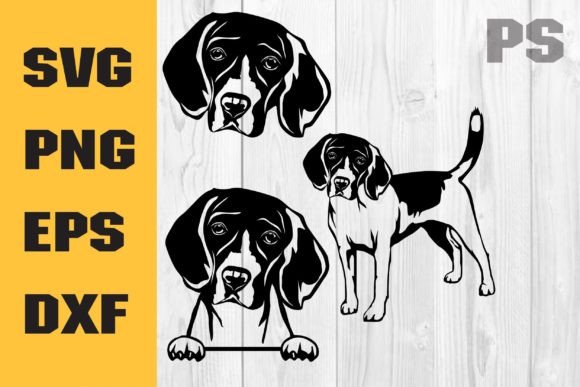
Beagle SVG for Cricut: A Designer’s Real-World Embroidery Review
Where It Shines—and Where You’ll Want to Pause
- Embroidered patches — Its clean edges hold up beautifully in merrowed or heat-seal backing.
- Sweatshirt embroidery — Stitches lay flat without excessive density, even on brushed fleece.
- Baby embroidery — Gentle shape feels age-appropriate on onesies and burp cloths; no sharp angles or fine details that snag.
- Holiday embroidery — Paired with a simple “Merry & Bright” script, it adds personality to tea towels and kitchen aprons without overwhelming.
- Commercial embroidery — Consistent line weight means reliable performance across multiple hoops and fabric batches.
- Small hoop sizes (<4") demand testing—reduce width to 2.5" and verify stitch continuity in ear tips and tail curve.
- Stretchy fabric (like ribbed knit tees) needs light cutaway stabilizer—this design doesn’t have built-in underlay compensation, so stabilization is your responsibility.
- Dark fabric requires high-contrast thread (e.g., white or cream on navy); the design’s open interior means fill stitches won’t mask shadowing if thread tension dips.
- Curved surfaces (caps, beanies) benefit from slight simplification—consider removing the subtle collar notch if stitching near a seam.
Practical Notes Every Embroidery Designer Should Run Through
- Test the design on scrap fabric matching your final substrate—canvas, cotton poplin, terry cloth, etc.
- Check thread color contrast in both natural and artificial light; some beiges read muddy on oatmeal linen.
- Review stitch density visually—if your machine allows, simulate the fill area to avoid dense clusters that stiffen lightweight fabrics.
- Confirm hoop size compatibility: this design fits comfortably in a 5x7 hoop, but push past 4.5" on textured fabrics only after test stitching.
- Inspect corners and curves at 200% zoom in your embroidery software—look for stray nodes or micro-gaps that cause jump stitches.
- Try black-and-white mockups: does the shape retain character without color cues? (It does—another strength.)
- Use appropriate stabilizer—tear-away for stable wovens, cutaway for knits, and soft stretch for baby items.
- Ask: does this support my brand voice? For a minimalist boutique, yes. For a hyper-detailed pet portrait service, consider pairing it with custom hand-drawn elements instead of relying on it alone.
⬇️ Download Free
Free download · No sign-up required
🔗 You Might Also Like
Crafts
As a designer who’s stitched hundreds of custom pieces—from boutique baby onesie...
Crafts
First Impressions: Charm with Craftsmanship Potential When I opened Floral Pug D...
Crafts
First Impressions: Warm, Simple, and Instantly Recognizable Opening the Live Lov...
Crafts
First Impressions: Friendly, Flexible, and Ready for Stitching Opening the Dog S...
Crafts
Design Notes You’ll Actually Use Run a test on scrap fabric *with the exact stab...
